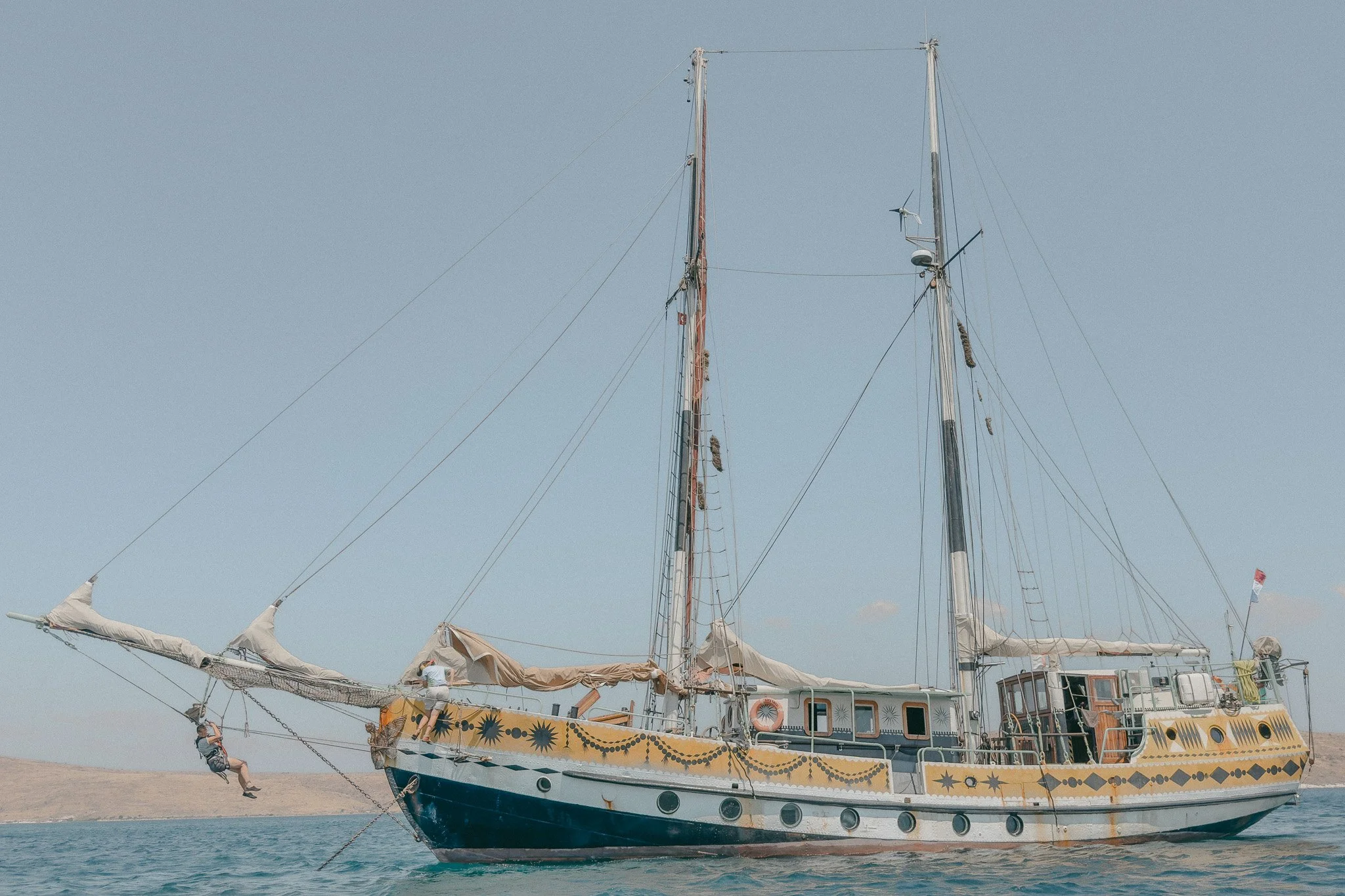
The ocean has a memory. For centuries, its trade winds and currents carried the heavy iron of colonial fleets, carving out maritime routes that bound archipelagos to empires. The historic spice route, stretching from the lush islands of Indonesia to the ports of Europe, was built on extraction, conquest, and a deeply entrenched, patriarchal seafaring culture. To be at sea meant navigating a realm of rigid hierarchy, where maritime superstitions and institutional exclusion relegated women to the shores.
In July 2026, during my two-week sailing residency aboard Arka Kinari—a wind- and solar-powered cultural sailing vessel—that legacy was quietly, deliberately undone.
By reversing the historical spice route, sailing westward from the East toward the Mediterranean, Arka Kinari operates as both an artistic vessel and a living manifesto for decarbonized futures. Joining the ship as a live-in crew member across the turquoise expanse of the Mediterranean, my camera documented far more than just passage across water. They captured a living ecosystem of shared labor, mutual care, and radical subversion: an all-female deck crew rewriting what it means to live, work, and survive at sea under the leadership of our captain.
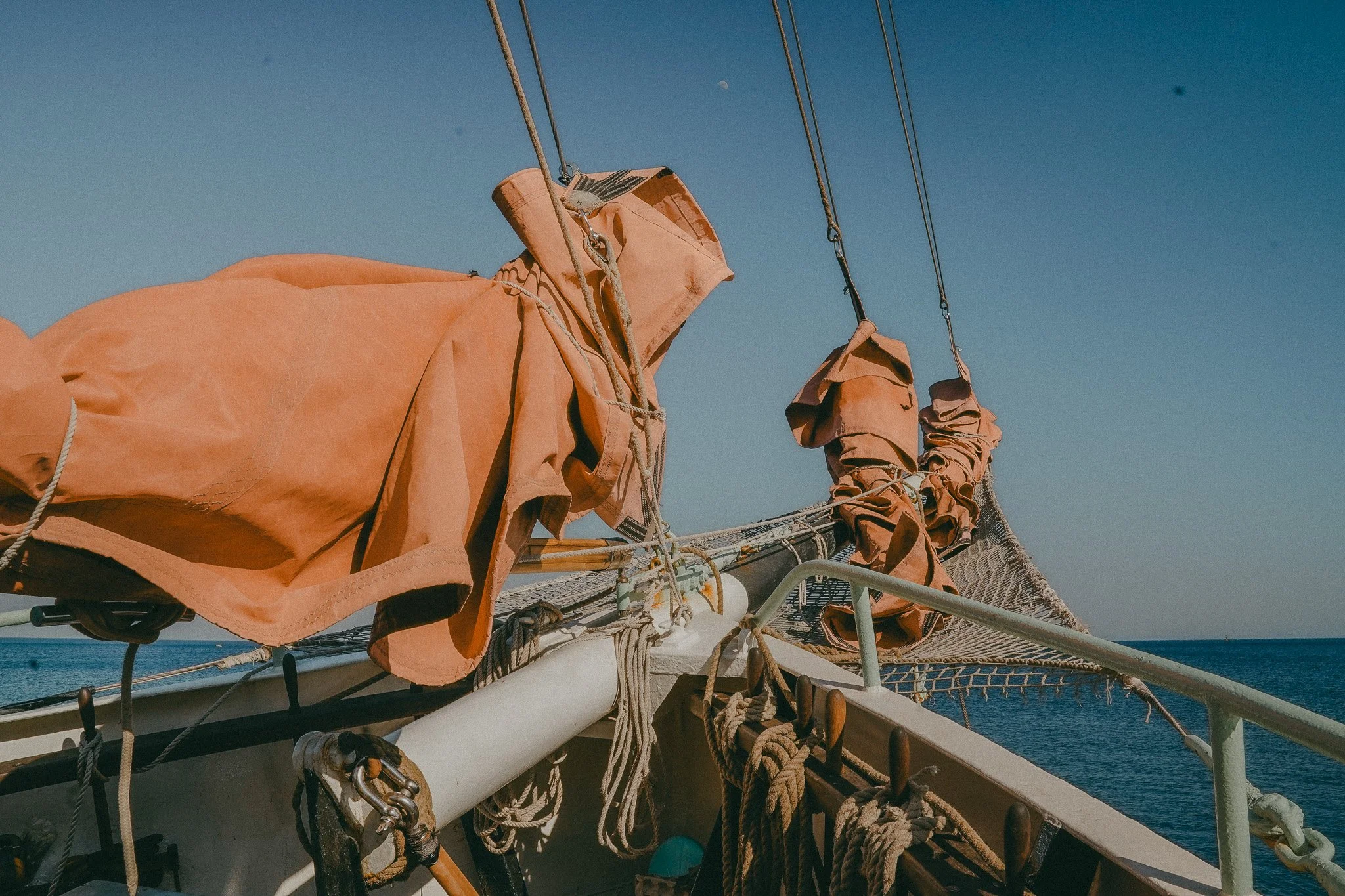

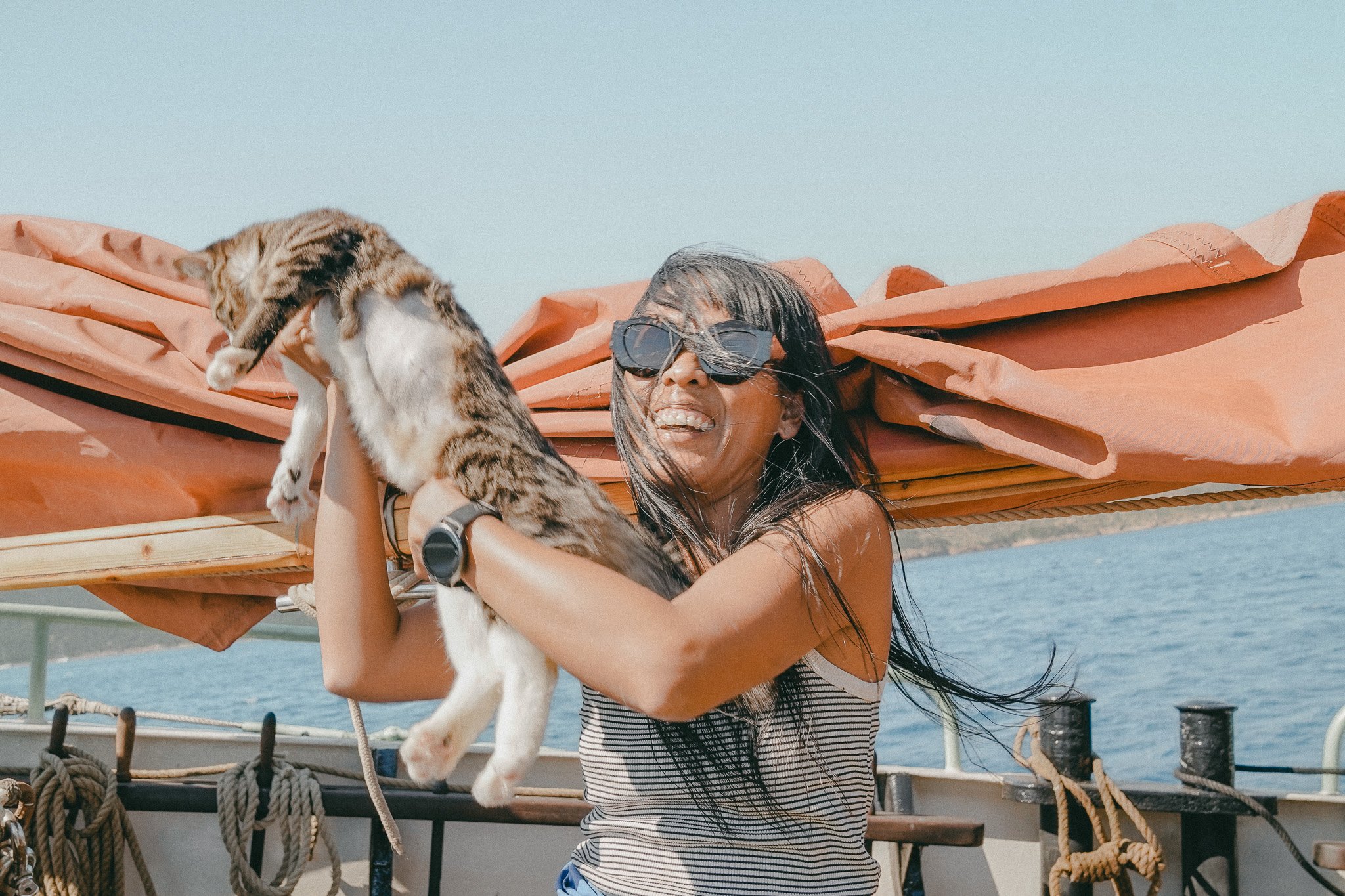
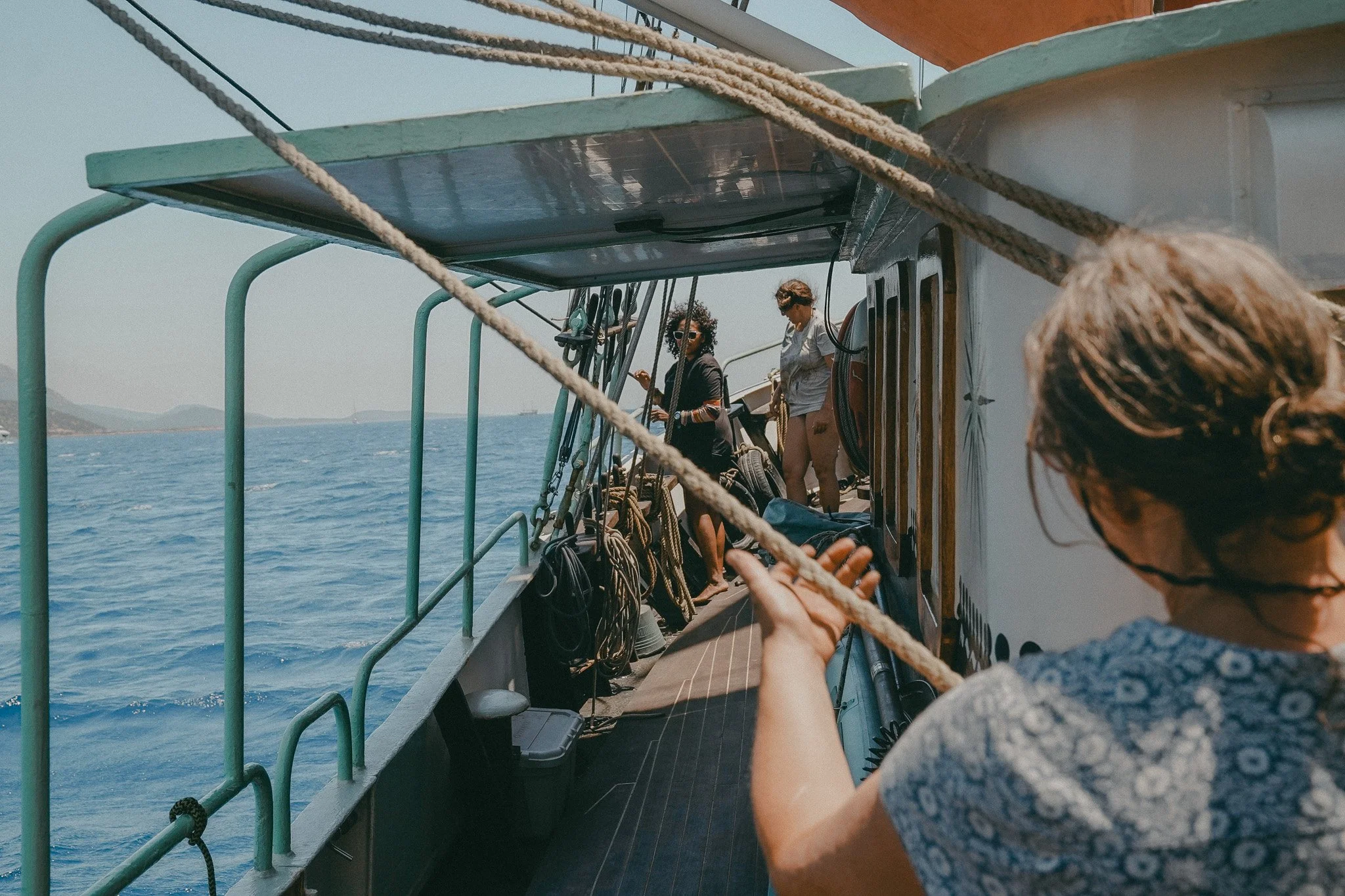
On the open water, the sea makes no concessions to terrestrial gender roles. A rolling deck, a sudden shift in wind, or a heavy tanbark sail requires immediate, unhesitating action. Aboard Arka Kinari, labor is completely stripped of patriarchal tradition.
There is no "women's work" separate from the "ship's work." The domestic sphere and the mechanical engine of the vessel merge into a single continuum of responsibility. Over those fourteen days, the same hands that hauled heavy lines at the pin rail, hoisted yards, and climbed the rigging to secure the mainsail were the hands that kneaded dough in the rolling galley, tracked weather charts at dawn, and inspected the auxiliary systems below deck.
This equal redistribution of duty disrupts centuries of maritime folklore that once viewed women aboard as either bad omens or passive passengers. Here, dedication is proved not through posturing or physical intimidation, but through showing up—shift after shift, watch after watch—with steady competence and unglamorous persistence.
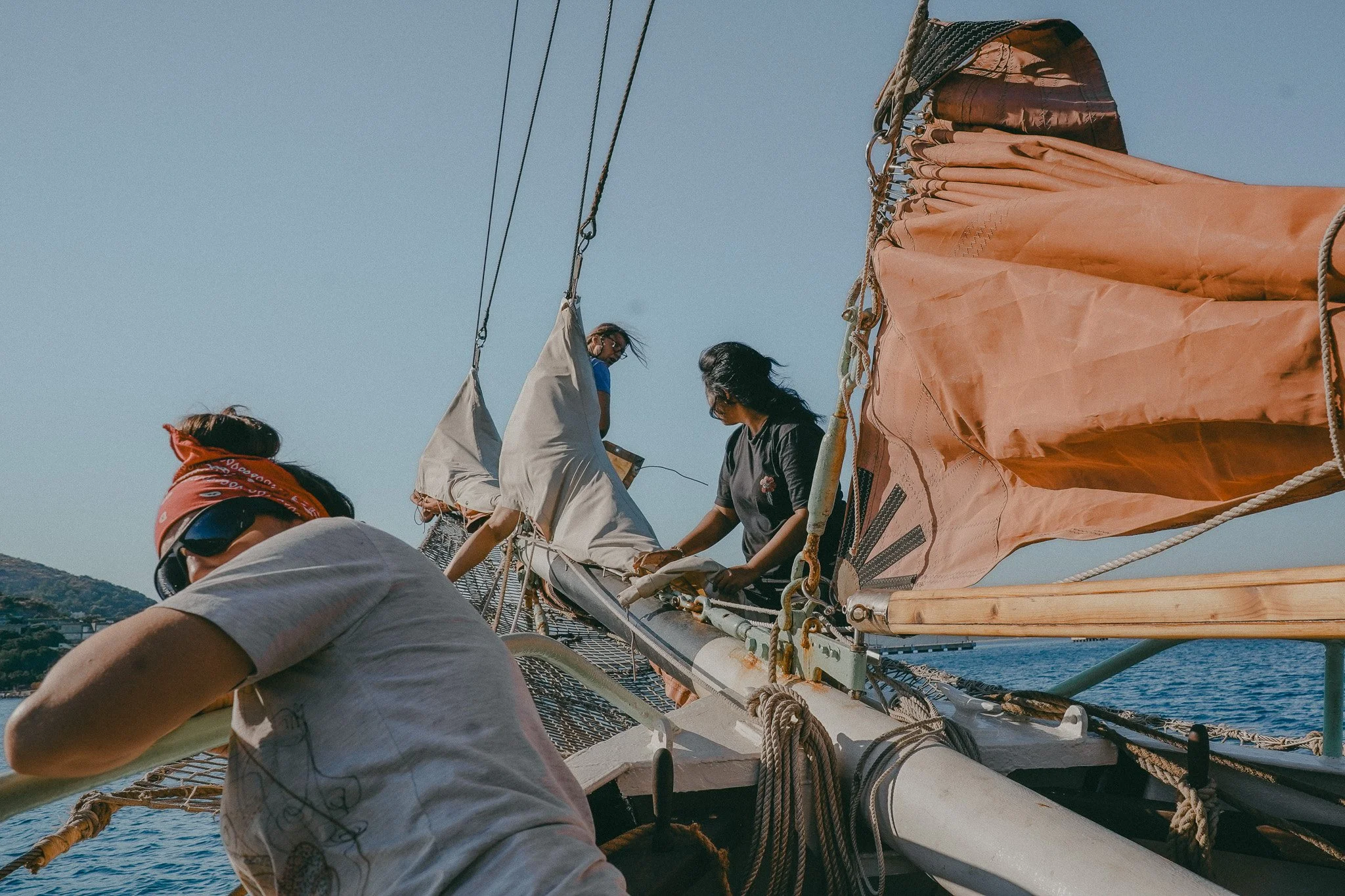
Traditional seafaring relies on absolute hierarchy—a top-down command structure forged in militaristic traditions. While navigating a vessel requires clear communication and vessel safety under the guidance of our captain, the daily life and survival of the crew aboard Arka Kinari were sustained by a radically different currency: mutual care and collective trust.
Night watches across the Mediterranean revealed this dynamic most clearly. Standing watch in the pitch-black hours between midnight and 04:00 AM, holding the course under a vault of stars, was an exercise in profound responsibility. You hold the lives of everyone sleeping below deck in your hands.
In this environment, duty is not enforced through fear or rigid authority; it is sustained by an instinctual empathy. It was the hot mug of tea passed up to the wheelhouse during a chilly shift, the quiet check-in before climbing the cross-beams, and the instinctive synchronization of three women hauling a stubborn line in unison. Authority gives way to an adaptive, living network of solidarity.
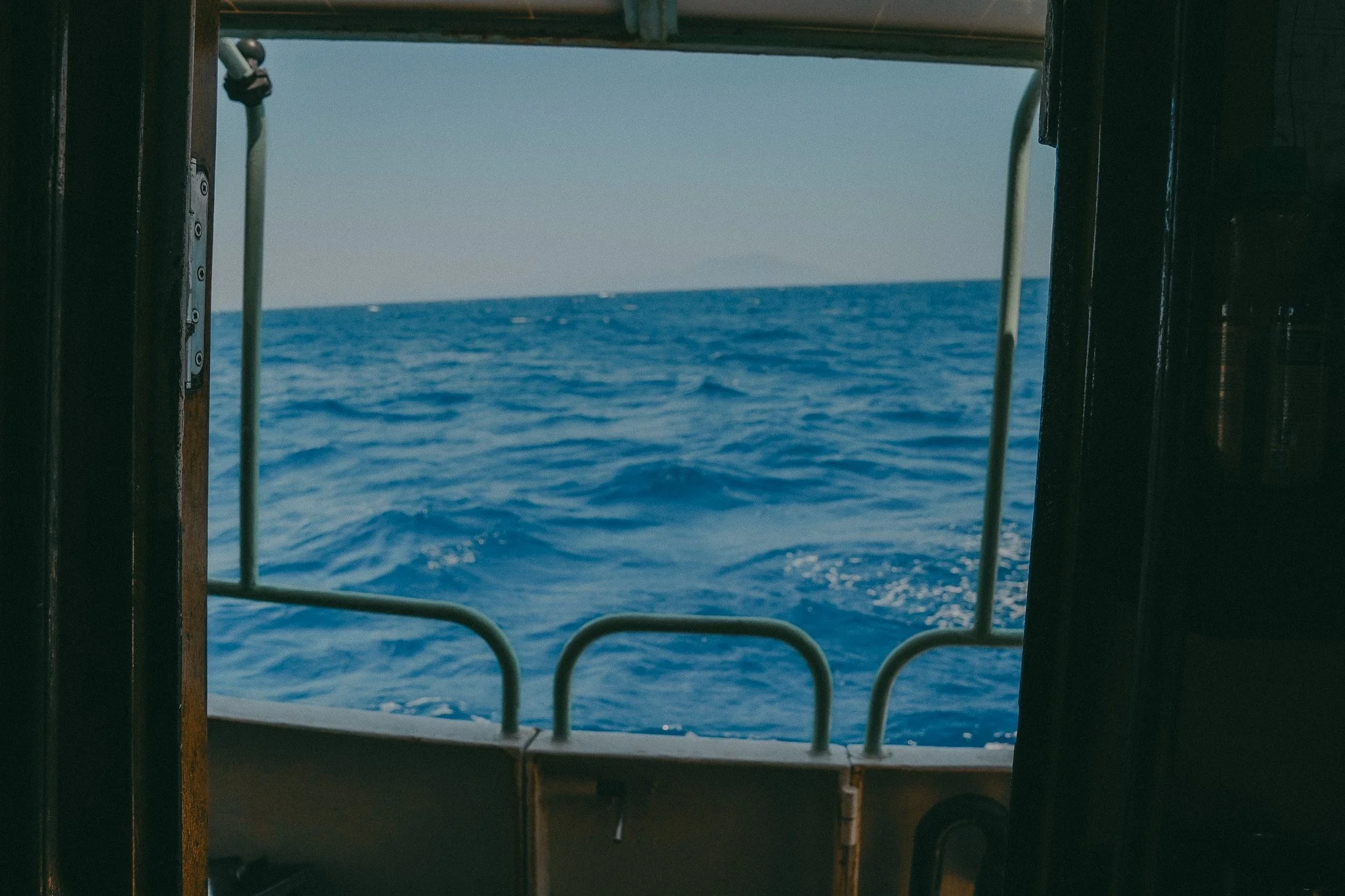
To be "bound by sea" carries a dual weight that I felt viscerally throughout my time on board: Contained within the wooden perimeter of a 70-foot schooner, completely subject to the whims of wind, tide, and sun; also bound to one another in absolute, unshakeable interdependence.
A sailing vessel powered by renewable energy demands hyper-awareness of planetary limits. When the wind dropped, we waited. When the sun hit the solar panels, power was restored. This harmony with natural elements mirrored the internal dynamic of the crew: we operated not as isolated individuals performing separate tasks, but as a singular, adaptive organism.
The unglamorous daily chores—scrubbing decks, coiling miles of weathered rope, peeling vegetables in a tight galley, and monitoring water consumption—became sacred rituals of devotion. They were the quiet thread holding the vessel together, proving that breaking ancient, patriarchal patterns does not always happen through loud declarations; often, it happens in the steady, deliberate rhythms of daily maintenance and unyielding commitment.
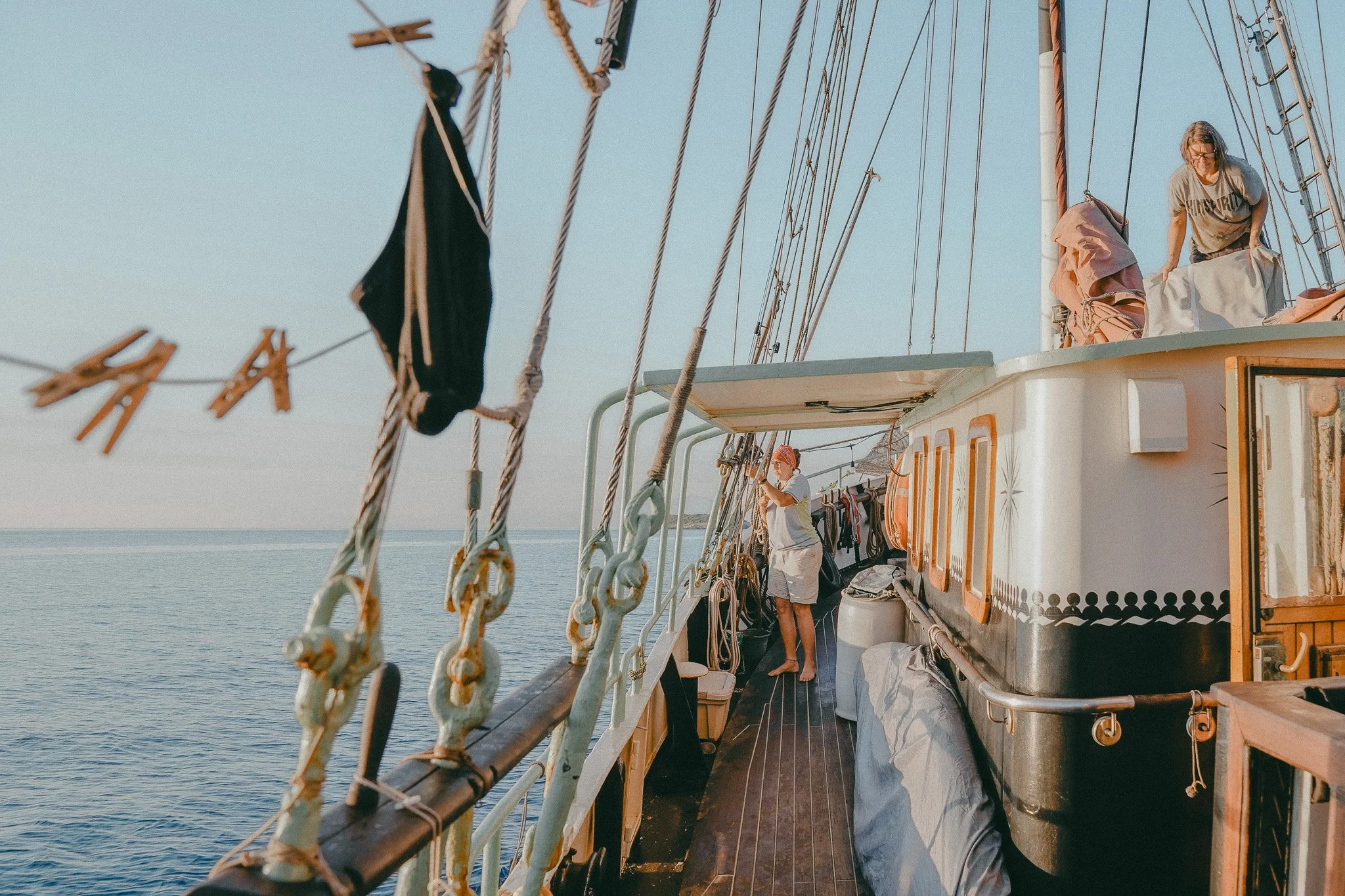
Bound by Sea stands as my visual and narrative tribute to these women—to their sweat, their laughter, their tired hands, and their quiet resilience during those two weeks together.
In tracing the spice route in reverse, Arka Kinari does not merely retrace history; it heals it. Across the open waters of the Mediterranean, this crew demonstrated that when legacy structures dissolve, what remains is not chaos, but a profound capacity for collective strength. Together, we carved a new passage across the water—one defined not by dominance or extraction, but by the quiet dignity of holding space, holding lines, and holding the horizon for one another.