On Wuthering Heights and Why Modern Gothic Adaptations Often Falter
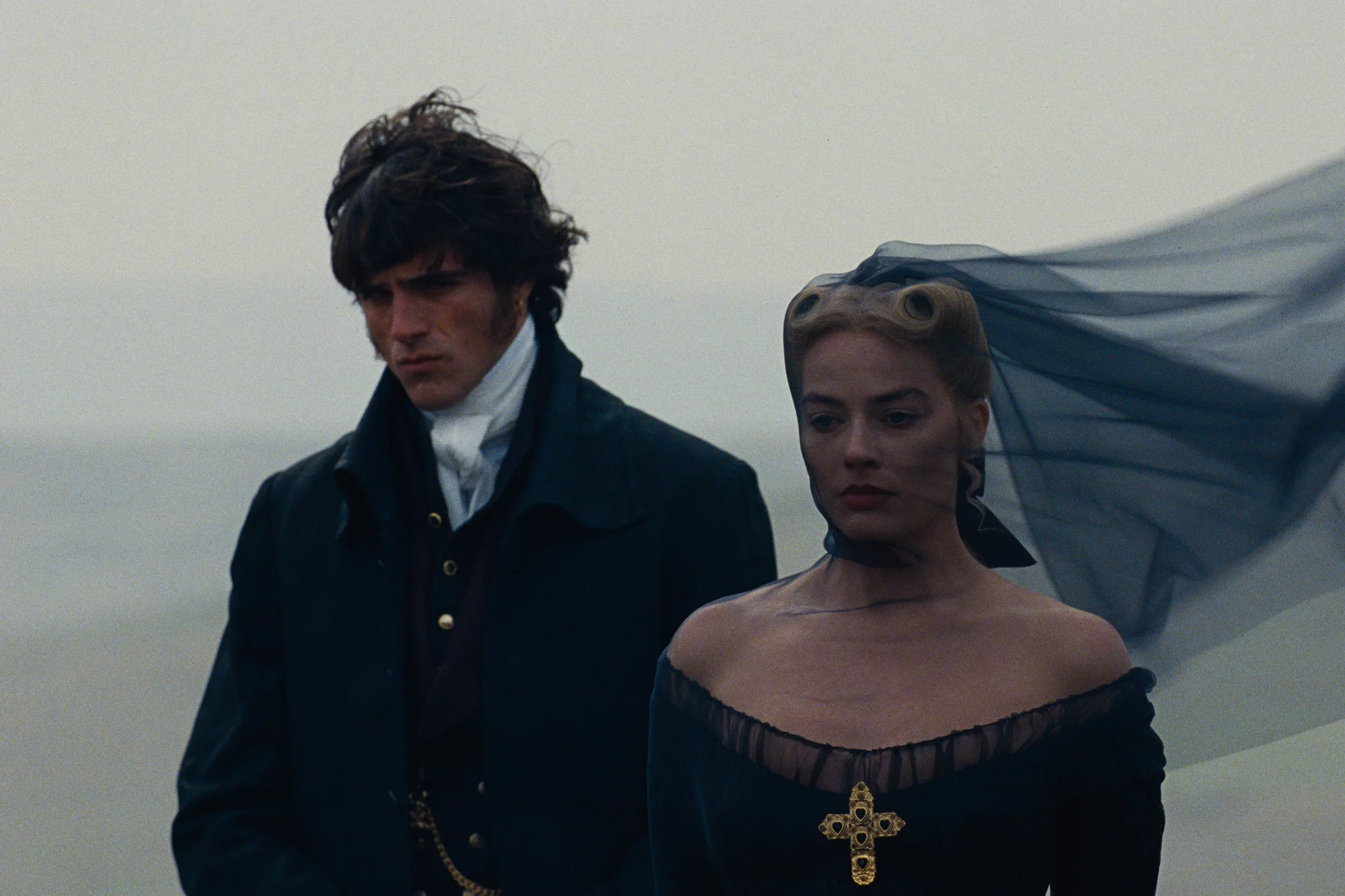
Warner Bros. Pictures
With the release of Emerald Fennell’s Wuthering Heights, Guillermo del Toro’s Frankenstein, and Robert Eggers’ Nosferatu, we see three distinct ways an adaptation can "go wrong."
While each director brings an undeniable mastery of craft to the screen, these films reveal the precise collision point where the thematic weight of the source material buckles under the pressure of a singular, dominant aesthetic.
Whether by simplifying complex philosophy into visual metaphor or trading the soul of the source for the sheen of the screen, these works prioritize the director's lens over the author's intent.
This recent wave of Gothic cinema has reignited a centuries-old debate: is a film’s primary duty to the text or to the director's vision?
The Problem of the "Pretty" Heathcliff
Emerald Fennell’s Wuthering Heights has become a flashpoint for critics who argue that the "Saltburn-ification" of the moors has stripped the story of its teeth.
In Emily Brontë’s novel, Heathcliff is a feral, dark-skinned outsider whose "otherness" is a barrier to social acceptance. By casting Jacob Elordi—a white, conventionally handsome "thirst trap"—Fennell effectively neutralizes the novel’s core themes of racial trauma and colonial anxiety.
When Heathcliff becomes a heartthrob rather than a marginalized victim of systemic abuse, the story shifts from a biting social critique to a high-fashion melodrama.
During her interview with the BBC last September, Fennell said: "I wanted to make something that made me feel like I felt when I first read it, which means that it's an emotional response to something. It's, like, primal, sexual."
On another occasion she told that she felt a "profound connection" with the book when she first read it at the age of 14. "It cracked me open," she said.
Yet, if your Heathcliff is just a hot guy in a nice coat, you aren't telling the story of Wuthering Heights—you're filming a perfume commercial.
If Heathcliff is just a "hot guy who was treated badly," the story becomes a simple soap opera. If he is a racialized outsider in a xenophobic 1800s England, the story is a biting social critique.
In the book, their love is a tragedy because it is impossible in the real world. In the film, it feels like it’s only impossible because they are both being "difficult."
The "nature" of the moors in the film feels like a curated 1950s fashion shoot rather than the mud-slicked, soul-crushing environment Brontë intended.
In this case, the adaptation "fails" because the aesthetic is so loud it drowns out the quiet, desperate reality of the characters.
Nature vs. Nurture: The Frankenstein Trap
While Fennell struggles with class and race, adaptations of Frankenstein often stumble on the philosophical question of "Nature versus Nurture."
Mary Shelley’s novel is a masterpiece of "Nurture"—the Creature is born benevolent and is driven to murder only by the abandonment of his "father," Victor Frankenstein. He spends months secretly watching a family—the De Laceys—learning language, history, and empathy. He saves a girl from drowning. He wants to be good.
It is only after being shot, beaten, and rejected by his "father" that he declares "war against mankind."
In many versions of Frankenstein’s movie adaptation, by making him a grunting beast from the moment he wakes up, they imply he was naturally a monster, which ruins Shelley’s point about parental and societal responsibility.
Modern films, including del Toro’s visually stunning version, often lean into "Nature." By focusing on the "abnormal brain" or the physical grotesqueness of the creation—the lightning, the bolts, the scars, they imply the Monster was doomed from the start. This choice absolves the creator, Victor, of his moral crimes.
Del Toro explained that Shelley’s seminal work is “the Bible” for him. “But I wanted to make it my own, to sing it back in a different key with a different emotion,” he said.
The book asks: Who is the real monster? The creature who kills out of loneliness, or the man who created him and abandoned him? But most movies make the Monster the villain so the audience has something to be scared of, which is much easier than making the audience think about the ethics of science and parenting.
But a lot of Frankenstein films focus on the "lightning and the lab" rather than the Creature’s self-education and yearning for love, it transforms a psychological tragedy into a monster movie.
The nuance of the "parental abandonment" theme is sacrificed for the spectacle of a "mad scientist" thriller.
Although del Toro’s version, in my opinion, offers a slightly different perspective. Both Victor and the Creature aim to answer mysteries–on what it means to be human, a creator, a creature, a father and son that crave love and seek understanding—and search for meaning in a world that can seem quite mad
The Nosferatu Paradox: Fear vs Fascination
While Frankenstein asks "Why was I made?", Nosferatu asks "What is coming for us?"
The remake of an unauthorized, expressionist German adaptation of Bram Stoker’s Dracula (1897) is rooted in a mix of beauty and terror. However, modern adaptations of Nosferatu often tip the scales too far toward the beautiful, forgetting that Orlok was designed to be a personification of plague and spiritual rot.
In F.W. Murnau’s 1922 original, Count Orlok was a vermin-like extension of death. He wasn't someone you’d want to understand; he was an apex predator of the soul. Modern reinterpretations, however, often fall into the "Aesthetic of the Eerie."
While Robert Eggers’ version leans heavily into historical accuracy and breathtaking chiaroscuro, there is a risk of the "Gothic Glaze":
By making the vampire’s obsession with Ellen Hutter a "darkly poetic" connection rather than a repulsive violation, the film risks aligning with the "Dark Academia" trend where misery is a fashion choice.
When every frame is a perfectly composed oil painting, the raw, jagged fear of the unknown is replaced by a polished appreciation of the set design.
If Orlok becomes a "misunderstood shadow" or a vehicle for high-concept cinematography, he ceases to be a monster and becomes a prop. The original power of Nosferatu was its ugliness; it was a film that felt like it had been unearthed from a grave. Modern versions often feel like they’ve been curated for a gallery.
Why They ‘Go Wrong’
The failure of these adaptations usually stems from three main factors:
Whether it's cutting the second generation in Wuthering Heights or the Creature’s literacy in Frankenstein, films often erase complexity and excise the parts of the book that require the most intellectual labor from the audience.
Directors often fall in love with the look of the Gothic—corsets, ruins, and shadows—without respecting the logic of the period.
Books allow us to live inside a character's head. Movies often replace that interiority with "modern" dialogue or sexualized dynamics that feel out of place in the source material’s spiritual landscape.
The "Aesthetic of Misery" in modern Gothic cinema is a double-edged sword. While these films are undeniably beautiful and bring 19th-century stories to a Gen-Z audience via "Dark Academia" aesthetics, they often do so by hollowing out the very heart of the source material.
Originally an internet subculture centered on the pursuit of knowledge and a vintage aesthetic, Dark Academia has bled into Hollywood as a visual shorthand for "seriousness." In this context, the Gothic is no longer a warning about the darkness of the human soul; it is a mood board.
By flattening these stories into a "vibe," directors appeal to a Gen-Z audience’s love for the look of 19th-century intellectualism while carefully removing the actual discomfort—the racism, the bodily horror, and the genuine ugliness of poverty—that made the source material revolutionary.
When we erase Heathcliff’s racial identity to make him a "thirst trap," turn Frankenstein’s intellectual Creature into a grunting slasher, or polish Orlok’s filth into a cinematic masterpiece, we lose the social and philosophical weight that has kept these books alive for nearly two centuries.
An adaptation "goes wrong" when it confuses being pretty with being profound. For the Gothic to truly live on screen, directors must be brave enough to embrace the "ugly"—the racial tensions, the unlikable protagonists, and the slow, agonizing decay of the soul—rather than covering it in a layer of high-saturation gloss.
Does the modern "Aesthetic of Misery" enhance the story, or does it bury it? If we continue to prioritize the aesthetic over the agonizing, we are left with a beautiful corpse: stunning to look at, but entirely devoid of life.